
Track Your Morning Routine for Productivity with Google Sheets Planner
The alarm goes off. You hit snooze—once, twice, maybe three times. When you finally drag yourself out of bed, you’re already running late. You grab coffee, scroll through your phone for “just a minute” that turns into twenty, then rush out the door feeling frazzled and behind before your day has even begun.
Now imagine this instead: You wake naturally, move through a series of intentional habits that energize your mind and body, and start your workday feeling focused, calm, and ready to tackle your biggest priorities. The difference between these two scenarios? A consistent morning routine—and a system to actually stick with it.

Why a Morning Routine Tracker Can Transform Your Day
High performers from CEOs to athletes swear by their morning rituals, and neuroscience backs them up. The first hours after waking represent a window when your willpower is strongest and your mind is most receptive to positive habits. Win your morning, and you set the tone for winning your entire day.
Yet most people struggle to maintain consistency. They start strong with ambitious routines, then gradually slip back into old patterns. The problem isn’t motivation—it’s the lack of accountability and visibility. You can’t improve what you don’t measure.
A morning routine tracker provides that essential accountability. By documenting your habits daily, you create a visual record of your consistency, identify patterns in your behavior, and build momentum through visible progress.
How to Use This Google Sheets Planner for Daily Productivity
Building a transformative morning routine doesn’t require hours of free time. Even 30-60 minutes of intentional habits can dramatically impact your productivity. Here’s how to design and track your perfect morning using a daily productivity planner:
Step 1: Define Your Core Morning Habits
Start with 3-5 non-negotiable habits that align with your goals. These might include:
Physical wellness: 20-minute workout, yoga, or a morning walk to energize your body and boost endorphins.
Mental clarity: 10 minutes of meditation, breathwork, or quiet reflection to center your mind before the chaos begins.
Personal growth: Reading 10 pages from a book, listening to an educational podcast, or learning something new.
Intentional planning: Reviewing your top 3 priorities for the day and time-blocking your calendar.
Creative expression: Journaling to process thoughts, set intentions, or practice gratitude.
Step 2: Input Habits Into Your Tracker
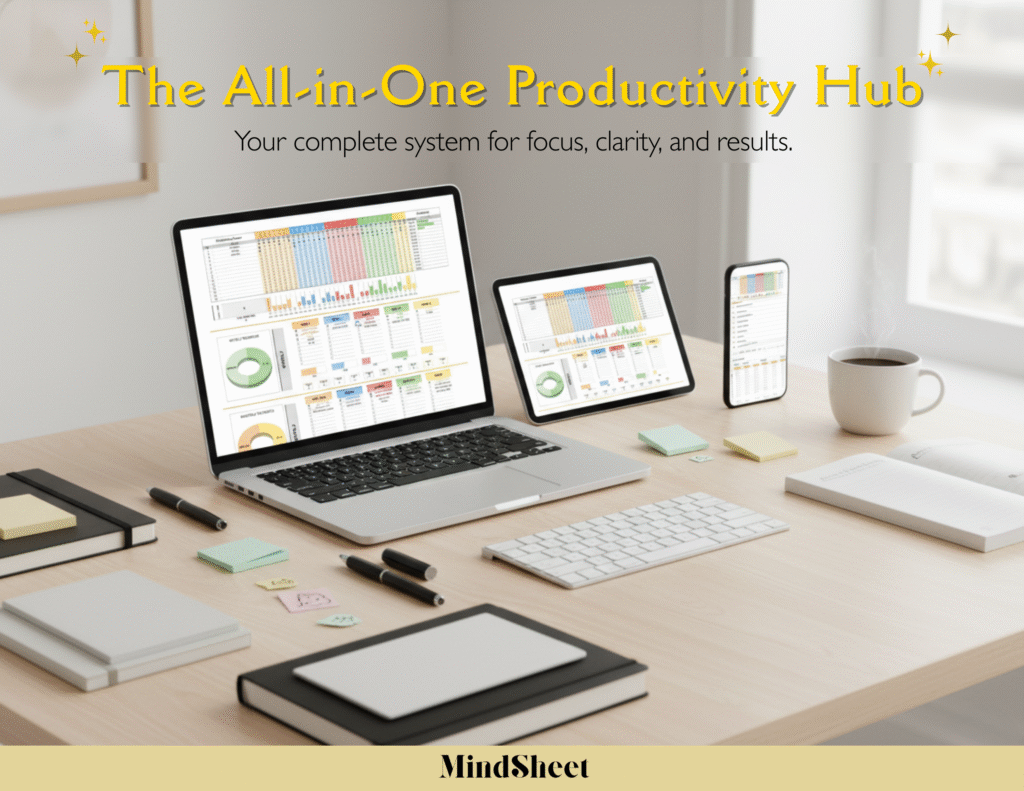
Your habit tracker Google Sheets should list each habit with a checkbox or completion marker. Include columns for the date, habit name, completion status, and optional notes about how you felt or any obstacles you faced.
Step 3: Track Daily Consistency
Each morning, as you complete a habit, mark it in your tracker. This simple act of checking a box provides immediate satisfaction and reinforces the behavior. You’ll quickly see your streak building—and once you’ve maintained a habit for several days, you won’t want to break that chain.
Step 4: Review Weekly Progress
Every Sunday, review your tracker. Calculate your completion rate for each habit. Did you hit your workout goal 5 out of 7 days? Journal only 3 times when you aimed for daily? This data reveals your true patterns, not just your intentions. Adjust your routine based on what’s realistically sustainable.
Build Habits That Stick
Jessica, a marketing director and mother of two, struggled for years to find time for herself. Her mornings were reactive—answering urgent emails before even brushing her teeth. Using a structured morning schedule template, she committed to waking just 45 minutes earlier. Her routine: 15 minutes of stretching, 15 minutes journaling, and 15 minutes planning her day’s priorities.
Within a month, her tracker showed 26 out of 30 days completed. More importantly, she reported feeling more present with her children, more focused at work, and more like herself. The tracking wasn’t restrictive—it was liberating. It proved she could prioritize herself, even in a busy season.
Or consider Marcus, a freelance designer who felt creatively blocked. He added just two morning habits: 10 minutes of freewriting and reviewing his project goals for the day. His personal growth planner revealed that on days he completed his morning routine, he finished 40% more client work and felt significantly more creative.
Maintain Momentum With Smart Strategies
Consistency isn’t about perfection—it’s about progress. Use these strategies to maintain your morning momentum:
Prepare the night before: Lay out workout clothes, prep your journal and pen, or queue up your reading material. Remove friction from your morning habits.
Start smaller than you think necessary: If 30 minutes of meditation feels daunting, start with 5. Build confidence through achievable wins.
Stack habits together: Link new habits to existing ones. “After I brush my teeth, I’ll do 10 push-ups.” This creates automatic triggers.
Focus on identity, not outcomes: Tell yourself “I’m someone who exercises in the morning” rather than “I need to lose weight.” Identity-driven habits stick longer.
Forgive missed days quickly: One skipped morning doesn’t erase your progress. Your tracker shows your overall trend—that’s what matters.
Your Morning, Your Success
The beauty of a tracked morning routine is the compound effect. Small habits, repeated daily, create extraordinary results over time. Better focus. Increased energy. Greater sense of control. Progress toward meaningful goals.
Your mornings are too valuable to waste on snooze buttons and social media scrolls. They’re the foundation of your productivity, the launchpad for your ambitions, and the daily opportunity to invest in becoming your best self.
🌅 Try our The All-in-One Productivity Hub today and start building the productive mornings you’ve always wanted!
Frequently Asked Questions
Q: What should I include in my morning routine tracker?
A: Include habits that support your physical health (exercise, healthy breakfast), mental clarity (meditation, journaling), and daily productivity (reviewing goals, planning priorities). Start with 3-5 core habits you can realistically maintain, then expand as consistency builds.
Q: How long should my morning routine be?
A: An effective morning routine can be anywhere from 30-90 minutes depending on your schedule. Quality matters more than quantity. Even 30 minutes of intentional habits—a 10-minute workout, 10-minute meditation, and 10-minute planning session—can transform your productivity.
Q: Why is a daily productivity planner better than just using memory or willpower?
A: Tracking creates accountability, reveals patterns, and builds motivation through visible progress. Research shows people who track habits are significantly more likely to maintain them. A planner removes the mental load of remembering and provides data to optimize your routine.
Q: What if I miss days in my morning schedule template?
A: Missing occasional days is normal and expected. The goal is progress, not perfection. Your tracker helps you spot patterns—if you’re consistently missing weekends, adjust expectations. If you miss after poor sleep, focus on earlier bedtimes. Use data to problem-solve, not to feel guilty.
Q: Can a habit tracker Google Sheets help with evening routines too?
A: Absolutely! The same tracking principles apply to any routine. Many people track both morning and evening habits in one planner—bedtime routines often support better mornings. Track whatever supports your personal growth goals and daily productivity.