
Google Sheets Household Chores Assignment for Fair Task Division
“It’s your turn to do the dishes!” “No, I did them yesterday!” “Well, I always do the laundry, so it’s only fair…” Sound familiar? If household chore arguments are a regular soundtrack in your home, you’re not alone. The number one source of domestic tension isn’t about money or parenting—it’s about who does what around the house.
When chores feel unbalanced, resentment builds. One person feels like they’re carrying the household while others seem oblivious to the work that keeps a home running. The solution isn’t more arguments or passive-aggressive sticky notes on the bathroom mirror. It’s a clear, visible system that ensures everyone knows their responsibilities and contributes fairly.

Why Every Family Needs a Household Chores Tracker
Mental load is real, and it’s exhausting. In most households, one person acts as the “household manager”—remembering what needs doing, when it needs doing, and who should do it. This invisible work is just as draining as the physical tasks themselves.
A household chores tracker eliminates guesswork and reduces mental load by making responsibilities visible to everyone. When tasks are clearly assigned and progress is tracked, several positive changes happen:
Accountability increases because everyone can see what’s been completed and what’s still pending. Fairness becomes measurable rather than subjective—you’re not arguing about feelings, you’re looking at data. Communication improves because the system facilitates conversations about workload instead of blame.
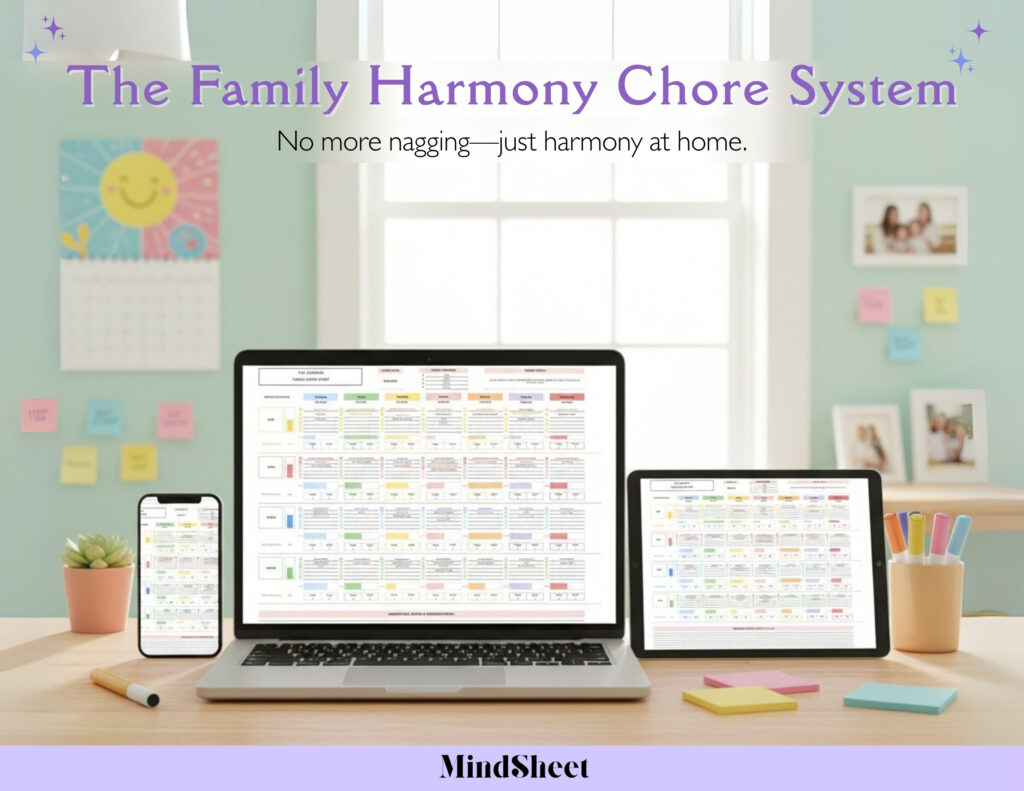
How to Use a Google Sheets Family Chore Chart
Setting up a family chore chart takes just minutes, but the impact lasts all year. Here’s your step-by-step guide to household harmony:
Step 1: List All Household Members
Start by adding everyone who lives in your home—adults, teens, and kids old enough to contribute. Even young children can handle age-appropriate tasks like feeding pets or tidying toys.
Step 2: Identify Every Recurring Task
This is the eye-opening part. List everything: dishes, laundry, vacuuming, bathroom cleaning, trash disposal, meal planning, grocery shopping, pet care, yard work, and even administrative tasks like paying bills or scheduling appointments. You’ll likely discover your household has 30+ regular tasks.
Step 3: Assign Tasks Fairly
Consider each person’s schedule, abilities, and preferences. Maybe one person handles weekday cooking while another tackles weekend deep cleaning. Perhaps teens rotate weekly chores while younger kids have daily responsibilities. The key is making assignments visible and agreed upon.
Step 4: Track Completion
Your home chores schedule should include checkboxes or completion dates. When someone finishes a task, they mark it complete. This creates accountability and gives everyone satisfaction from seeing their contributions.
Step 5: Rotate Regularly
Prevent boredom and build skills by rotating certain tasks monthly or weekly. This also ensures no one gets stuck with the least desirable jobs forever.
Fair Task Division Made Simple
The Martinez family of five struggled with constant bickering about chores until they implemented a shared system. Mom had been doing 70% of household work while feeling invisible. Using a Google Sheets task planner, they discovered Dad was handling outdoor maintenance and car care (tasks that seemed less frequent to others), while the teenagers genuinely didn’t realize how many daily tasks existed.
Now, each family member has a color-coded section. The teens rotate weekly between dishes, bathroom cleaning, and vacuuming. Parents split cooking, laundry, and errands. Even the 7-year-old has a daily chart for making his bed, feeding the dog, and clearing his dishes. Sunday family meetings review the week and adjust assignments if needed.
Or consider college roommates Jake and Emma, who nearly ended their friendship over dirty dishes and overflowing trash. Their household task management template now clearly shows Jake handles Monday/Wednesday/Friday tasks while Emma covers Tuesday/Thursday/Saturday. Sundays rotate. The visual system removed all ambiguity and saved their living situation.
Keep It Consistent and Positive
A chore system only works if your family sticks with it. Here’s how to maintain momentum:
Make it visible: Keep your digital chart accessible on shared devices or print a weekly version for the fridge.
Start small: Don’t overhaul everything overnight. Begin with the top 5-10 tasks causing the most friction, then expand your system.
Celebrate contributions: Acknowledge completed tasks during family dinners or with a simple “thanks for taking care of that.”
Build in flexibility: Life happens. Your system should allow swapping tasks when someone’s sick or unexpectedly busy.
Review regularly: Monthly check-ins ensure the division still feels fair as schedules and responsibilities change.
Transform Your Home Environment
A home where everyone contributes isn’t just cleaner—it’s happier. Children learn responsibility and life skills. Partners build mutual respect. Roommates maintain friendships. When the burden of household maintenance is truly shared, everyone has more energy for the activities and relationships that matter most.
The secret isn’t perfection. It’s having a system that makes expectations clear, contributions visible, and fairness achievable. Your home deserves teamwork, not tension.
🧺 Try our The Family Harmony Chore System today and bring balance, fairness, and teamwork to your home!
Frequently Asked Questions
Q: What should be included in a household chores tracker?
A: A comprehensive household chores tracker should list all recurring tasks (daily, weekly, monthly), assigned household members, completion status, and rotation schedules. Include both obvious tasks like dishes and hidden ones like planning meals or restocking supplies.
Q: How do I create a family chore chart that kids will actually follow?
A: Make it age-appropriate and visual. Use color-coding, include pictures for younger children, start with just 2-3 tasks per child, and build positive reinforcement. Let kids choose between tasks when possible to increase buy-in and ownership.
Q: What’s the best way to divide household chores fairly?
A: Consider time commitment, difficulty level, and frequency—not just the number of tasks. A Google Sheets task planner helps you see the full picture. Assign based on schedules and preferences, then review monthly to ensure the division still feels equitable to everyone.
Q: How often should we rotate chores in our home chores schedule?
A: Weekly or monthly rotation works well for most families. Daily tasks (dishes, tidying) might stay constant while deeper cleaning tasks rotate. Find a rhythm that prevents boredom without creating confusion.
Q: Can a household task management template work for roommates, not just families?
A: Absolutely! Roommates benefit even more from clear systems since there’s no family obligation creating natural accountability. A shared digital tracker prevents awkward conversations and ensures everyone contributes equally to shared spaces.